
Kinesiology for ADHD
Start With the Body, Not the Label
Kinesiology for Dysregulation
Your child's body has been telling you something for a while now — through the meltdowns that arrive faster than anyone can catch them, the constant need to move, the mind that won't switch off, the mornings that unravel before the day has properly started. Whatever word eventually gets attached to it, none of that is imagined and none of it is your child being difficult on purpose. It's real, it's information, and it's asking for a response.
Somewhere along the way, ADHD might become that word — through school, a GP, a family member or your own instinct that something needs a closer look. A proper diagnosis can be genuinely useful: it can open support at school, clarify medication as an option, and give a family language for what they're living with. But a diagnosis was never meant to be where the story ends, and it isn't where this work begins either. What matters here is the body in front of us, not whether it's carrying an official name.
Two different kinds of appointments
Picture two paths. One is built around appointments that keep asking the same question: does this behaviour match enough boxes on a list to earn a name, and how severely? Assessment, checklist, review, all circling the label. The other is built around a different question entirely: what does this nervous system need right now to feel safer, steadier and more able to meet the day?
Neither path is wrong, and plenty of families end up walking both at once. But it's worth noticing which question is actually driving your calendar, because they lead to different places. Chasing the label can leave a family exhausted by process and still without much practical change at home.
Supporting the nervous system directly — through regulation, movement, reflex integration, and gently working with the shame and stress sitting underneath — tends to show up as something you can feel in the house within weeks: an easier bedtime, a shorter meltdown, a calmer morning. That's the shift this work is interested in.
Why a label was never the whole picture
It helps to know the label itself is softer than it looks.
There's no blood test or brain scan for ADHD — (There was oridinally and that was part of my story which you can read below) it's built from behaviour checklists, interpreted by a clinician, and that interpretation has moved a great deal over time: broadened criteria, diagnosis rates that have climbed sharply while underlying symptom severity has stayed flat, and odds that shift with a child's gender, postcode, and even how young they are for their school year.
Even a good response to medication turns out to be less conclusive than assumed — recent research suggests it works by lifting alertness and motivation rather than sharpening attention specifically, an effect that shows up in all brains with or without ADHD. None of this makes the symptoms less real. It just means the name attached to them has always involved more judgement than certainty, which is exactly why this work follows the body rather than the paperwork.
The body doesn't need a name for what it's carrying
A nervous system under enough strain produces a familiar picture, whichever direction it came from — restlessness, a mind that can't filter a busy room, big reactions, sleep that won't settle, coordination still catching up.
Stress, poor sleep, sensory overload, trauma, or a nervous system that simply hasn't caught up yet can all produce this picture, with or without a diagnosis attached.
So instead of asking whether the behaviour fits a category, we ask something more useful: what's triggering this response in this particular child, right now, and what does their body need in order to feel safe enough to settle? That question doesn't need a label to be answered.
The shame that often hides underneath
One of the most common emotions living quietly beneath most ADHD adaptive behaviour is shame.
A child who's redirected, corrected or singled out more often than their peers starts to absorb a sense that something about them is wrong, even when everyone around them means well.
What follows is usually a set of adaptive behaviours built to keep that exposure hidden: the class clown act that deflects before anyone else can point it out, the perfectionism that tries to outrun any chance of getting it wrong, giving up before starting so it never has to be tried and failed, anger that arrives as a shield, or a quiet withdrawal that looks like disinterest but isn't. These aren't the problem to fix. They're a nervous system's best attempt at protection, and they tend to soften on their own once a child feels genuinely safe and regulated rather than watched and managed.
What support looks like instead
Rather than a series of appointments spent assessing and re-assessing whether behaviour matches a checklist, sessions here follow a different rhythm: gentle muscle monitoring used as biofeedback, asking the body directly what it's carrying and what it's ready to release. Two children showing an identical picture can have completely different stories underneath, so the plan follows what's true for this child — nervous system regulation, Brain Gym-style movement, body work, acupressure, breathwork, applied neurology or gently working with the emotional stress and shame sitting under the behaviour.
The principle threading through all of it is regulation before expectation: a nervous system needs to feel safe before it can be expected to focus, sit still or manage a big feeling well.
How it moves through the Four Pillars
We think about development across four pillars — Cognitive, Social, Emotional and Physical — and this picture tends to touch all of them at once. Cognitively, it's a working memory that drops things unfinished. Socially, it's talking over others or missing a turn, not from a lack of care but a nervous system moving faster than the moment allows. Emotionally, it's big reactions and the shame and masking that often follow them. Physically, it's a body that fidgets, climbs or moves almost constantly, seeking the input it needs to feel right. Seeing all four at once opens up more places to help, and more ways for a child to feel understood rather than just managed.
Learning to support the reflexes underneath
One thread that often comes up is retained primitive reflexes — early reflex patterns every baby is born with, meant to integrate as the nervous system matures. Children showing this kind of nervous system picture are more likely to still be carrying some of these past the usual age. A retained Moro reflex can leave a child hypersensitive and quick to startle; a retained spinal Galant reflex has been linked to restlessness and poor concentration. Supporting a reflex to finish integrating isn't offered as a cure, and nobody can promise it resolves every symptom — but a nervous system still holding an old reflex pattern is one working harder than it needs to, and helping it complete that developmental step is often some of the most useful work we can do together.
If a diagnosis is part of your path
For plenty of families, pursuing a diagnosis is exactly the right call — it can bring school support, clarity, and medication as a genuine option. This work was never meant to argue against it, or to replace a paediatrician, psychologist or any therapy already helping your family. It sits beside them, adding a nervous-system-first layer underneath, so whatever else your child is receiving has more room to land.
Calmer minds, balanced bodies, happier hearts
You don't need a diagnosis in hand, every other option tried, or any answers at all before reaching out. A first session is simply a chance to listen to what your child's body is ready to show us — meeting them exactly where they are, label or none.
Below are a list of useful tools that will often show up in clinic. The Kinesiology gift is not needing to do them all but to know which specific tool is right for you.
Saffron for ADHD kids
Why: eases restlessness and supports a calmer, steadier focus, sitting more gently with a child's appetite and sleep than other options can.
How families find it helps: a settled afternoon and evening, less of the wired, snappy edge that used to show up after school.
Best time to use: mornings, with food, taken consistently rather than only on hard days.
Cost: roughly $30–45 for a month's supply.
I personally love the saffron available through Happy Herb. They also have other herbs like Brahmi and Lion's Mane to explore.
It’s always good to do a little background reading on their properties and characteristics, but remember that herbs can affect children differently from adults and may interact with pharmaceutical medications.
MAGNESIUM for ADHD kids
Why: one of the nervous system's key calming minerals, supporting the body's own ability to come down out of high alert and into rest. Magnesium is best absorbed in the correct ratio to calcium, with vitamin D assisting binding; I use NEO LIFE for this purpose.
The wrong type or dose of magnesium can actually create ADHD-like symptoms in some individuals too. Often in clinic, I suggest going a few weeks without it as part of your plan.
If you are reading this, it is to understand that magnesium can have a big impact on your nervous system and, just like everything in life, too much or too little can be an easy thing to change. Magnesium, if required for the nighttime wind-down, is often best absorbed through the skin. But I would always say to address the mental gymnastics as well, so that magnesium use can naturally fall away over time.
How families find it helps: an easier wind-down at bedtime, often noticeable within a couple of weeks.
Best time to use: evening, an hour or so before bed. Cost: around $20–35 for a bottle, lasting one to two months.
Leafy greens, nuts, seeds and legumes build it up through food at no extra cost.
Weighted Blankets for ADHD Kids
Why: deep, even pressure gives an overstimulated nervous system something solid to settle around.
How families find it helps: easier bedtimes and steadier sleep once it becomes part of the routine, sometimes a calmer spot for homework or screen-free wind-down too.
Best time to use: bedtime, or any quiet, settling activity during the day.
Cost: roughly $60–150 for a child-sized blanket, guided by about 10% of your child's body weight.
Earthing Mat For ADHD Kids
Why: reconnects the body to the earth's natural charge, one of the simplest ways to help a wired nervous system come back down. Especially good for children who spend all day within a synthetic, built-up Wi-Fi-filled school ground or live within an apartment high-rise.
How families find it helps: a child who settles into sleep faster once it's tucked under the sheet, or sits more calmly at a desk with feet on one.
Best time to use: overnight under the sheet, or under a desk during homework or screen time.
Cost: roughly $50–120 depending on size.
Heavy Work For ADHD Kids
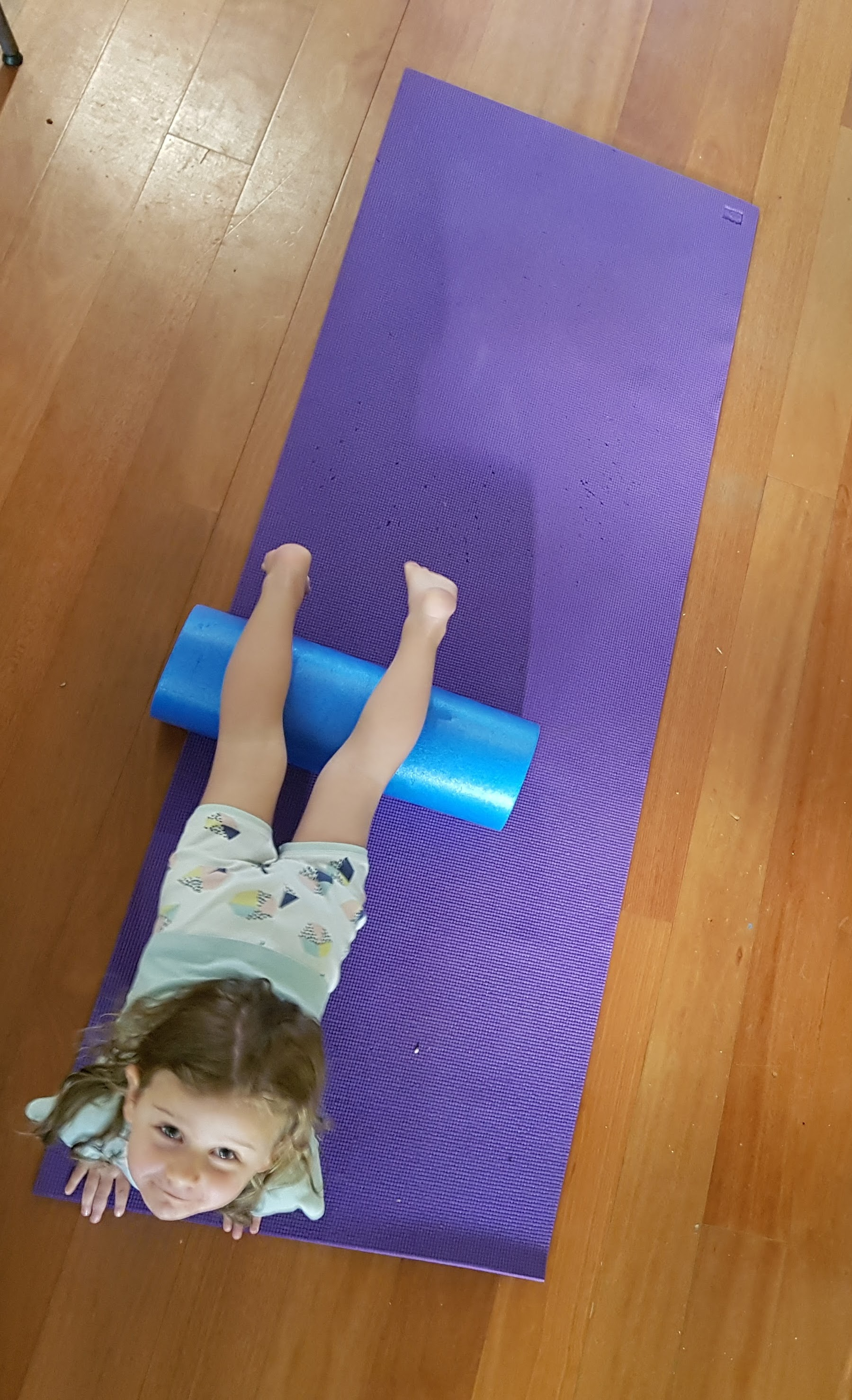
Why: pushing, pulling, carrying, wheelbarrow walks, climbing and trampoline time load the joints and muscles, giving a busy nervous system real, organising input before you ask it to sit still and concentrate.
How families find it helps: a noticeably smoother transition into homework or school, fewer meltdowns in that first half hour after pick-up. Best time to use: right before a transition that usually asks a lot of them — before school, before homework, or whenever a meltdown feels like it's building.
Cost: free.
MY OWN ADHD Experience
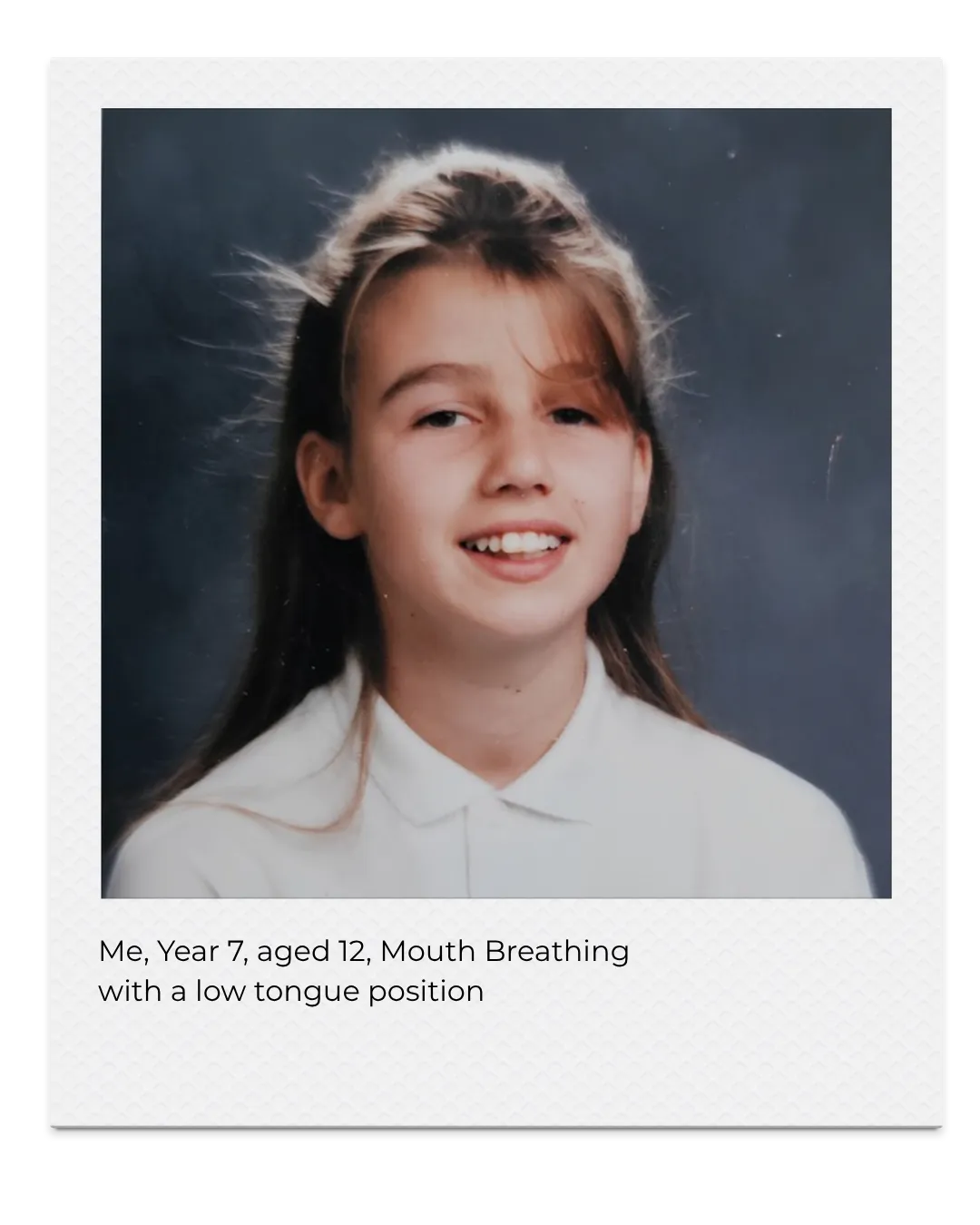
No individual within the clinic has the same story. I am only one. But this one story has led me here.
When I was diagnosed, it wasn't a simple conversation in a local clinic. I travelled nine hours by car to Sydney to be physically, emotionally and neurologically tested. The process was long and, in many ways, confronting. I remember sitting in a glamorous office adorned with the most beautiful crystal chandelier. The psychologist — Dr Salikavizits, a complete tongue-twister for little dyslexic me! — oversaw the process, while a team of professionals asked detailed questions about how I learned, behaved and responded to the world around me. Paper-and-pencil tasks measured problem-solving, puzzles tested spatial awareness, and memory exercises required me to recall patterns and sequences.
Later, I underwent EEG testing. Small electrodes were attached to my scalp to record brainwave activity as I sat as still as possible — initially at rest, then later while reading, tracking with my eyes, and responding to visual stimuli. My results showed exceptionally high spatial intelligence, excellent visual memory (shapes and patterns over letters), strong problem-solving skills and a high IQ — but also lower-than-average brainwave activity trending towards the theta range. The final diagnosis was ADHD and dyslexia, and I was prescribed dexamphetamine to "speed up" my brainwaves. At the time, I internalised the idea that my intelligence was trapped, waiting behind the sluggish pace of my brain's rhythm. I now know the opposite to be true.
At that moment in time, medication felt like the only solution. And while I did notice improvements — particularly in how quickly I could complete tasks, organise my thoughts and write during the peak of my HSC — the gains were more about output speed than depth. It didn't enhance my capacity for deep learning or the integration of complex ideas. Instead, I became a machine for rote learning, repetition and textbook regurgitation. I mastered the game of matching syllabus dot points with content, not the art of meaning-making. On the outside, I may have seemed more emotionally regulated, but in truth, there was simply no time for emotions to land. I was thinking, moving and performing faster than my natural rhythm — too fast for feelings to process through the body.
What I lost was my kinaesthetic sense. While the dexamphetamine gave me more physical energy in the sports I played, I could no longer feel the game in the same way. I lost my natural ability to anticipate movement, to read the play before it unfolded, and to respond intuitively in the moment. More than that, I lost touch with the subtle intelligence of my body — my ability to connect to and interpret other people's emotions, to physically feel sensations that once guided my intuition, and to channel my energy toward manifesting the goals I deeply desired. That embodied intelligence, which had once been my internal compass, went quiet.
In retrospect, I reinforced the belief that I needed to work harder, achieve more within a limited timeframe, and operate through structure and logic alone. The medication didn't just shift how my brain processed — it distanced me from my own inner wisdom. Now, through the lens of my Human Design blueprint, this realisation is nothing short of mind-blowing. That phase of disconnection wasn't a reflection of my true energy, my natural gifts or my intelligence — it was a temporary override. The loss of my kinaesthetic sense didn't just dull my intuition; it amplified the shame I was already carrying — the story that I was dumb, useless and less-than.
And what's even more mind-blowing is this: people actively maintain meditation practices to access theta-level brainwaves, to improve intuition, creativity, manifestation and calm. And I? I was essentially a walking, talking version of this. But instead of being celebrated, I was medicated. Instead of being supported in developing my innate gifts, I was told I was too much, and taught to override them to meet a standard that was never designed for someone like me.
And this is where kinesiology and Human Design offer a completely different approach. Instead of overriding the system, we learn to listen to it — to work with the body, not against it. If you've made it this far, chances are something in this story resonates, whether it's your own journey, or that of a child or loved one. Stay tuned, because in the next few posts I'll be sharing simple, practical tools you can use between sessions to restore balance, unravel the nervous system, and reconnect with your own unique gifts.
let's stay connected!

View our Privacy Policy and Terms and Conditions here © 2026. All Rights Reserved.


